
3% of wind and solar capacity targets can charge India’s EV sector by 2032: Report
- Editorial Team
- Jul 29, 2025
- 3 min read
Updated: Nov 9, 2025
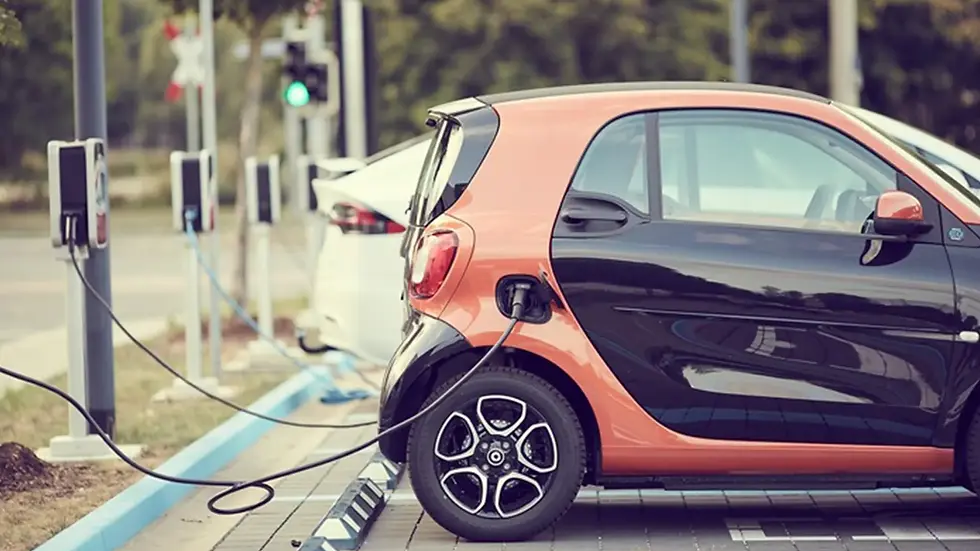
Ember’s analysis showed that EV charging infrastructure has to be aligned with the availability of clean electricity from renewable sources.
Renewable energy and electric vehicles are both growing in India. Aligning both can result in genuine emission reduction. Following the National Electricity Plan (NEP-14), if India is able to achieve its renewable capacity ambitions by 2032, then just 3% of wind and solar capacity targets can power the country’s entire electric vehicle (EV) fleet.
This conclusion was drawn in a new report by the energy think tank Ember, which used India’s EV stock projections for 2030/2032 for its analysis.
According to the report, India’s EV charging demand will hit 15 GW by 2032 — or 3% of NEP-14’s wind and solar capacity target of 486 GW by the same year.
But in order for this to happen, there needs to be changes in national policies. More specifically, EV charging infrastructure has to be aligned with the availability of clean electricity from renewable sources, highlighted the report.
Renewable tariffs for EVs
Ember’s analysis selected 10 Indian states — Assam, Bihar, Gujarat, Karnataka, Madhya Pradesh, Maharashtra, Odisha, Rajasthan, Tamil Nadu and Uttar Pradesh — factored around total EV sales in FY25.
The report found that EV sales in India have leapfrogged by 11x between FY2020 and FY2025, and 22.3% of EV charging, nationally, is done through clean energy. However, it is more in some states compared to others.

States with more hydro power like Karnataka, Madhya Pradesh, and Uttar Pradesh, around 37.6%, 23.8%, and 18.3% of electricity, respectively, come from clean sources. On the other hand, Gujarat, which has more wind and solar, but limited hydro, has only 12.3% clean electricity, according to the report.
“Today, most EV charging happens at homes in the evening and night, when fossil fuels dominate the power mix. Using measures such as Time-of-Day (ToD) tariffs while expanding public charging stations, especially at workplaces and commercial hubs, will enable more daytime charging and greater use of clean energy,” says Ruchita Shah, Energy Analyst at Ember.
States such as Assam, Bihar, Gujarat, Madhya Pradesh, Maharashtra, Odisha, Rajasthan and Tamil Nadu have already introduced solar-hour ToD tariffs for EVs, found the report. Rebates are provided on EV charging during solar hours, while surcharges happen during peak hours.




Comments