The Belém Climate Summit will be held from November 6–7
With less than a week remaining for the United Nations annual climate conference COP30, things are heating up, literally and otherwise. Before countries convene at Belem, in the northern Brazilian state of Para, other promising meets and events are hogging the spotlight.
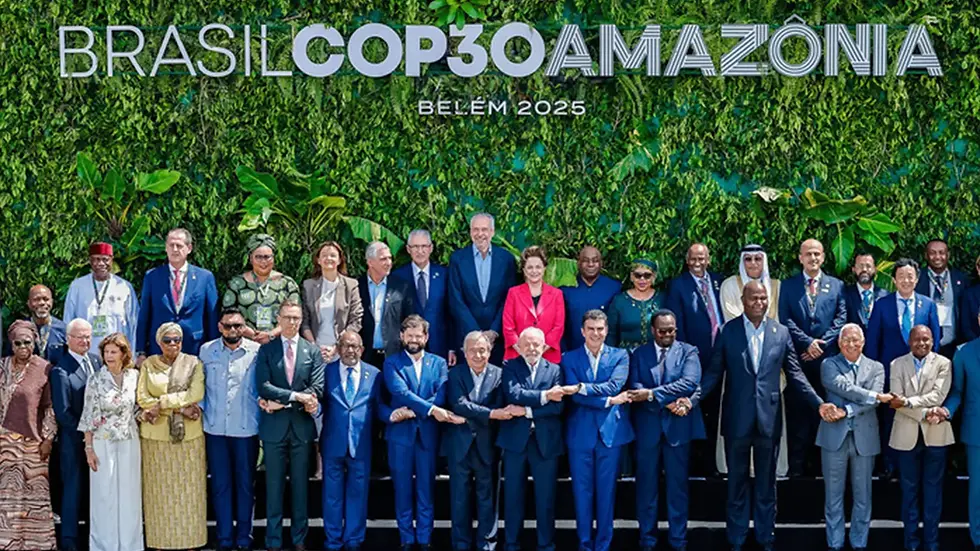
The Belém Climate Summit, to be held from November 6–7, will see heads of state and government, ministers, and leaders of international organisations come together to discuss what needs to be done at COP30. It will be convened by the Brazilian President Luiz Inácio Lula da Silva.
The PRI, which is a UN supported network of international financial institutions, is hosting the event PRI In Person from November 4-6. As part of the ‘COP30 Business and Finance Forum’, the event will host eminent speakers such as Ana Toni (COP30 CEO) and Dan Ioschpe (Climate High Level Champion).
Considering that the realisation of the Baku to Belem roadmap of raising $1.3 trillion every year till 2035 is not possible without private investment, this event can mark a significant shift in how the conversation is shaped at COP30.
Countries to the fore
From today onwards, representatives from LDCs (least developed countries) are holding meetings, while SIDS (Small Island Developing States) and AGN (African Group Negotiators) will also convene this week to hash out their priorities going forward to COP30.
From resilient food systems to demands for robust climate finance mechanisms to execution of voluntary carbon credit schemes, these will be at the forefront of these pre-COP discussions.
The contested decision of hosting the conference in Belem, a comparatively smaller city, was rooted in shining the light on how the world’s greatest carbon sink — the mighty Amazon rainforest — is facing grave threat due to climate change. The rights of the indigenous peoples who inhabit the Amazon basin are intertwined with the preservation of the forest.
COP30 aims to push forward both these issues. Through the launch of the $125 billion Tropical Forest Forever Facility (TFFF), it aims to channel at least 20% of the funds to uplift indigenous communities. Naturally, their participation is also anticipated highly.
The Facilitative Working Group (FWG) of the Local Communities and Indigenous Peoples Platform is holding four meetings this week to see how they can further indigenous needs and demands in the climate negotiations.
“European emissions may not be that significant these days, but if we can’t achieve decarbonization in Europe with all the resources we have, then who can? That’s why we have to stand up, do the job properly, on time, and show clearly what kind of policies we’ll use,” said Laurence Tubiana, CEO of the European Climate Foundation, at a pre-COP webinar held last week.
Countries like Brazil and China are among the 67 nations to have submitted their NDCs already, with India expected to announce. This can change how the negotiations have happened till date.



Comments